



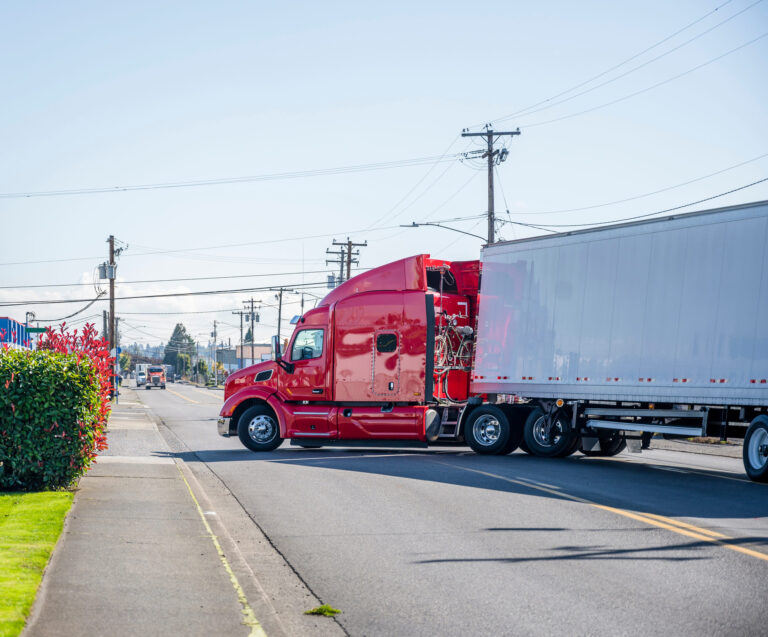
A collision with an 18-wheeler isn’t like a fender bender. The forces involved can be catastrophic, the injuries are often life-altering, and by the time the dust settles, you may find yourself facing mounting medical bills, lost wages, and a trucking company that already has a legal team working to limit what it owes you. It’s for this reason that you should contact a truck accident lawyer in Northwest Indiana from Lerner and Rowe as soon as possible.
If you’ve been hurt in a commercial truck crash on I-65, I-80, I-94, or any of the roads crossing Lake and Porter Counties, you need to move quickly — and you need to know what you’re dealing with. If you’re asking yourself ‘what to do after a truck accident in Indiana,’ this guide from our Indiana truck accident lawyers walks through exactly that.
Truck Accident Lawyer Northwest Indiana Key Takeaways
The Northwest Indiana region is located along two of the most congested freight transport routes in the country. There are special considerations for handling truck crash cases including differences in trucking company liability in Indiana and a greater value of insurance coverage than for regular automobile accident cases. Evidence is fleeting. With help from an experienced semi truck accident lawyer in Merrillville Indiana, you can protect your rights.
Why I-65 and I-80/I-94 are Dangerous Corridors
Northwest Indiana is not simply a location that people travel through; it’s one of the most heavily traveled truck corridors in the United States due to its geography. The Chicago metropolitan region produces large amounts of freight traffic, and two major highways providing this traffic access from the South and East pass directly through Lake and Porter Counties.
I-65 is a main truck corridor linking Chicago with Louisville, Nashville, and beyond. I-80/I-94 is far busier. Running east-west in Gary and Hammond, the road links the Port of Indiana with Chicago’s freight system and plays a vital role in the national interstate highway network. The US Federal Highway Administration (FHWA) has designated the section of the road as one of the busiest trucking routes in the entire United States. Conflicts in merge and lane-changing zones as well as driver fatigue due to long hauls characterize the route.
I-94 proceeds east in Portage and Porter County, connecting traffic bound for Michigan and serving the freight distribution centers around Valparaiso.
According to INDOT reports, Lake County remains at the top of commercial vehicle collision reports filed annually in Indiana. With high volumes of freight movements, complex interchange layouts, and inclement weather conditions including lake effect snow, ice, and fog, a single mistake behind the wheel involving an 80,000-pound semi is devastating.
What Should You Do after a Truck Collision in Indiana?
How you respond to a truck accident is critical in determining your future. Here are tips from a truck accident attorney Valparaiso Indiana on what you need to do:
- Seek professional medical care without delay. Adrenaline will numb your senses, and you may think nothing is wrong. However, brain trauma, internal bleeding, and spinal injuries do not necessarily give immediate indications of their presence. Have yourself checked out, and heed all medical advice given.
- Contact the police. An accident report filed by the police constitutes legal evidence of the accident. In accidents involving commercial vehicles, a particular form must be filled out and filed by the officer at the scene with INDOT.
- Document everything you can. Photographs of the scene, your vehicle, the truck (including its DOT number and company markings), road conditions, and your injuries. If there are witnesses, get names and contact information. This will all help with your eventual Indiana truck accident settlement.
- Don’t speak to the trucking company’s insurance adjuster. Carriers and their insurers have experienced claims teams whose job starts the moment a crash is reported. A recorded statement you give while you’re still injured and shaken can be used to undercut your claim later. Let an I-65 truck accident attorney Indiana handle that conversation.
- Contact an 18-wheeler accident attorney Lake County in Indiana as soon as possible. This isn’t just about legal representation from a skilled commercial vehicle accident lawyer in Indiana — it’s about evidence preservation. More on that below.
FMCSA Regulations in Indiana Truck Accidents: Evidence That Can Make or Break a Claim
This is where truck accident cases fundamentally differ from typical car accident claims. Commercial truck operators are regulated by the Federal Motor Carrier Safety Administration (FMCSA), and that regulatory framework creates a paper trail — if you move fast enough to get it.
The Black Box
Nearly every commercial truck on the road today is equipped with an Electronic Control Module (ECM) — essentially a vehicle black box. It records speed, braking force, throttle position, engine RPM, and cruise control status in the seconds before a crash. Combined with Electronic Logging Device (ELD) data, which tracks hours of service in real time, this information can reveal whether the driver was speeding, whether the brakes were applied, and whether the driver had been behind the wheel far longer than FMCSA’s legal limits allow.
FMCSA hours-of-service rules cap truck drivers at 11 hours of driving within a 14-hour workday, with required rest periods between shifts. Violations are common, particularly on high-demand routes like I-65 and I-80. A fatigued driver pushing past their legal limit is a driver whose judgment and reaction time are compromised — and the ELD data can prove it.
Here’s the problem: trucking companies are not required to preserve this data indefinitely. ECM and ELD records can be overwritten within days. Dashcam footage gets recycled. Maintenance logs get “misplaced.” The moment a preservation letter goes out from an I-80 truck accident lawyer in Indiana, the company is on notice that this data must be retained. Without that letter, evidence that could define your case may simply disappear.
Beyond electronic data, FMCSA regulations require carriers to maintain:
- Driver qualification files — verifying licensing, medical certifications, and driving history
- Drug and alcohol testing records — including post-accident testing requirements
- Vehicle inspection, repair, and maintenance logs
- Cargo securement records for loads that may have shifted
Each of these is potential evidence. Each has a retention deadline. A truck accident attorney who handles FMCSA cases knows exactly what to ask for and how quickly to ask for it.
Frequently Asked Questions
Q: What steps should I take after an accident involving a semi truck in Indiana?
Seek medical treatment at once; you may not realize how seriously you’ve been hurt. Have the police file a report about your accident. Take pictures of the truck and record the DOT number and the name of the trucking company involved. Avoid making statements to the insurance company regarding what happened. You’ll need the services of a semi truck attorney from Northwest Indiana soon after your crash, because any potential evidence could disappear very quickly.
Q: What kinds of liability are associated with a semi truck collision?
Indiana recognizes several bases for imposing trucking company liability, including respondeat superior (liability for the driver’s negligence) and other bases such as negligent hiring, negligent entrustment, and negligent maintenance. Additional parties such as the cargo broker, the cargo loader, or the truck manufacturer could be liable as well, depending on why the accident occurred.
Q: What FMCSA violations apply here?
FMCSA violations commonly litigated in Indiana trucking accidents include hours-of-service rules (11-hour driving time in a 14-hour period), electronic logging devices (ELD) issues, driver qualification/licensing, drug and alcohol testing, and vehicle inspection and maintenance. The records from the black box and ELD devices will verify whether the rules were violated; however, preservation of those records needs to be done quickly using a legal hold letter.
Q: How much is my Indiana truck accident case worth?
There is a huge variation in the amount of money you may get in a settlement for your Indiana truck accident, based on factors like the seriousness of your injuries, the amount of fault attributed to each party, how many parties may have contributed to your injuries, and the availability of insurance.
Under federal law, general cargo carriers have to have at least $750,000 liability coverage in Indiana. Factors that could affect your case’s value include medical bills (past, current, and expected future expenses), lost earnings, disability, pain and suffering, and any punitive conduct by the motor carrier.
Q: Do I need a truck accident attorney, or should I talk to the insurance company myself?
There is a great deal of danger in communicating with the insurance company on your own. Insurance companies for carriers and employ specialized claims adjusters whose job is to minimize payments. They might get in touch with you soon after an accident occurs, even while you are still recovering from your injuries, requesting a recorded statement or trying to settle early on.
Call Our Truck Accident Lawyer Northwest Indiana Team Today
If you or someone in your family has been seriously hurt in a commercial truck crash on I-65, I-80, I-94, or anywhere in Northwest Indiana, please don’t wait.
Our Indiana personal injury team handles commercial truck accident cases from investigation through resolution. We know how to secure electronic evidence before it’s gone, how to identify every responsible party, and how to build a case that reflects the full extent of what you’ve been through. There are no upfront costs, and with our no-fee promise, you won’t owe us anything unless we win.
Call (844) 977-1900, reach us through our online contact form, or connect with us via LiveChat. The sooner we hear from you, the more we can do for your case.
The information on this blog is for general information purposes only. Nothing herein should be taken as legal advice for any individual case or situation. This information is not intended to create, and receipt or viewing does not constitute, an attorney-client relationship.