



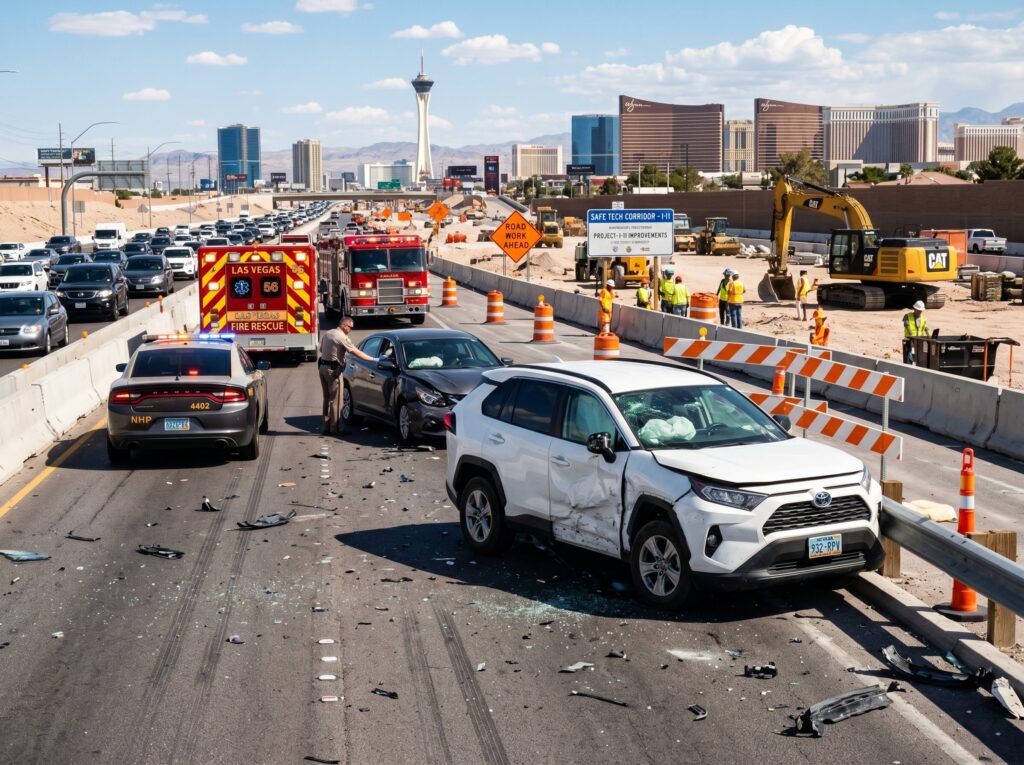
The I-11 SafeTech Corridor Project launched at the end of May 2026. For Las Vegas commuters, the effects were immediate: 24/7 lane restrictions, HOV closures, and abrupt lane shifts on a critical stretch of US 95 between Rancho Drive and Rainbow Boulevard. This has led to an increase in rear-end crashes, sideswipe collisions, and other types of automobile wrecks. Drivers navigating a work zone that changes by the day. If you’ve been hurt in an I-11 construction accident, a Las Vegas car accident lawyer from Lerner and Rowe Injury Attorneys is ready to fight for every dollar of compensation you deserve.
What Is the June 2026 I-11 SafeTech Corridor Project?
The I-11 SafeTech Corridor Project is a multi-phase infrastructure upgrade designed to modernize traffic management along US 95 through the Las Vegas Valley. The June 2026 phase is expected to cause significant traffic disruptions. Construction crews operate 24 hours a day between Rancho Drive and Rainbow Boulevard, running lane reductions and HOV closures that compress a high-volume corridor into fewer lanes with minimal advance warning.
For drivers heading toward Downtown Summerlin or commuting past Red Rock Casino Resort during peak hours, the impact can be severe. Merge distances shrink and speeds drop without warning, which can be a jarring change from the typical I-II commute. Furthermore, US 95 traffic accidents along this stretch have already increased since project activity intensified. The valley’s summer heat compounds the risk, since hot pavement extends braking distance, and driver fatigue rises sharply in slowed construction zone traffic.
Top Causes of an I-11 Construction Accident
Work zone crashes don’t happen at random. Specific conditions along this corridor create elevated accident risk every day. These are the primary causes our team encounters in I-11 construction accident claims.
Sudden Stops Between Rancho Drive and Rainbow
The stretch between Rancho Drive and Rainbow Boulevard is among the most unpredictable segments of the project. Lane shifts occur without consistent advance signage. Drivers moving at highway speed encounter construction tapers that compress three lanes into one or two with very little transition distance. Abrupt stops follow, along with the rear-end crashes that come with them.
A Rancho Drive lane closure crash typically involves a driver who failed to anticipate the lane reduction in time. Work zone speed limits drop to 45 mph in active areas, but many drivers carry highway speeds into the narrowed lanes. Sideswipe collisions are equally common as drivers merge late and compete for shrinking space. Summer road work collision risk peaks during late afternoon when rush hour and active construction overlap.
Liability in an I-11 Construction Accident
Determining liability after an I-11 construction accident isn’t always straightforward. Multiple parties may share responsibility, including the distracted driver who rear-ended you, the contractor responsible for inadequate signage, or both.
Holding Negligent Drivers and Contractors Liable
Under Nevada negligence law, any party that caused another person’s injuries due to a failure to act reasonably can be held liable. That applies to the driver who ignored work zone speed limits just as much as it applies to the contractor who failed to maintain adequate warning signs. Both parties can be named in your personal injury claim.
Construction companies working in Nevada work zones carry insurance. Their carriers employ experienced adjusters focused on limiting payouts, denying injury victims money that’s rightfully theirs. A Las Vegas car accident lawyer from Lerner and Rowe Injury Attorneys knows how to investigate the full liability picture. This includes pulling maintenance records, reviewing signage compliance, and identifying every party responsible for your crash.
A Lerner and Rowe Nevada auto injury attorney familiar with work zone cases builds the strongest possible evidence file before the construction crew removes or alters the scene.
Steps after an I-11 Construction Accident
The steps you take immediately after a summer roadwork collision on US 95 can determine whether your claim succeeds or fails. Work zones create unique evidence challenges. Lane configurations change overnight and surveillance video from construction equipment is preserved for a short window. While it’s important to gather evidence quickly, you should move to safety first.
Next, call 911 immediately, since a police report can be one of the most important documents to support your claim. Photograph the lane configuration, signage, skid marks, and all vehicles involved before conditions change. Collect contact information from every driver and any witnesses. Do not give a recorded statement to an insurance adjuster before speaking with an attorney, since deceptive insurance tactics are common in work zone cases.
FAQ: I-11 Construction Accident Claims
Our team hears from Las Vegas drivers hurt in work zone crashes every week. Here are answers to the most common questions.
Who Is at Fault for a Work Zone Crash?
Fault depends on the specific circumstances. If a driver ran a work zone speed limit and hit you, that driver bears primary liability. If inadequate signage or improper lane marking contributed, the contractor may share responsibility. Nevada follows a modified comparative fault standard, so multiple parties can be held responsible in proportion to their actions.
How to Safely Report an I-11 Construction Accident?
Call 911 from a safe position away from active traffic. Stay in your vehicle if conditions are dangerous. If you can exit safely, move to the shoulder or an emergency pullout. Give the responding officer a factual account of what happened. Request your crash report number before leaving the scene. Your attorney can obtain the full report once it’s filed.
Can I Sue the Construction Company for My Injuries?
Yes, if the company’s negligence contributed to your crash. Common grounds include inadequate warning signage, improperly executed lane merges, unmarked hazards, and failure to maintain safe traffic flow. These cases are more complex than standard claims. They require a Las Vegas car accident lawyer from Lerner and Rowe Injury Attorneys who understands construction zone liability under Nevada law.
Do Double Fines Apply if Another Driver Hit Me?
Nevada law requires double fines for moving violations in active work zones. That applies to the at-fault driver, not to you as the victim. A citation against the driver who hit you is powerful evidence of negligence. Your attorney can use it to establish liability and strengthen your claim for the full value of your damages.
How Long to File an I-11 Construction Accident Lawsuit?
The state gives injured victims two years from the date of the crash to file a personal injury lawsuit. That window sounds comfortable, but it can go by quickly as you’re recovering from injuries. Work zone evidence disappears quickly and witnesses become harder to locate, so contact a Las Vegas car accident lawyer as soon as possible after an I-11 construction accident. The earlier your attorney starts, the stronger your case.
Contact a Las Vegas Car Accident Lawyer Near Me
An I-11 construction accident can produce serious, life-altering injuries. Insurance companies representing at-fault drivers and contractors will fight hard to minimize what they pay. You need an accomplished Las Vegas injury attorney fighting for your best interests.
Lerner and Rowe has achieved billion-dollar results for more than 150,000 injury victims nationwide, including $1 billion in the last three years alone. Contact us today for a free consultation. Remember, you won’t pay a cent in legal fees unless we win, thanks to our no-fee promise.
Lerner and Rowe is available to assist you 24 hours a day, 7 days a week. Give us a call at (844) 977-1900 for immediate assistance. If you prefer to connect online, you can reach our LiveChat representatives or submit your consultation request through our secure online form.
The information on this blog is for general information purposes only. Nothing herein should be taken as legal advice for any individual case or situation. This information is not intended to create, and receipt or viewing does not constitute, an attorney-client relationship.