



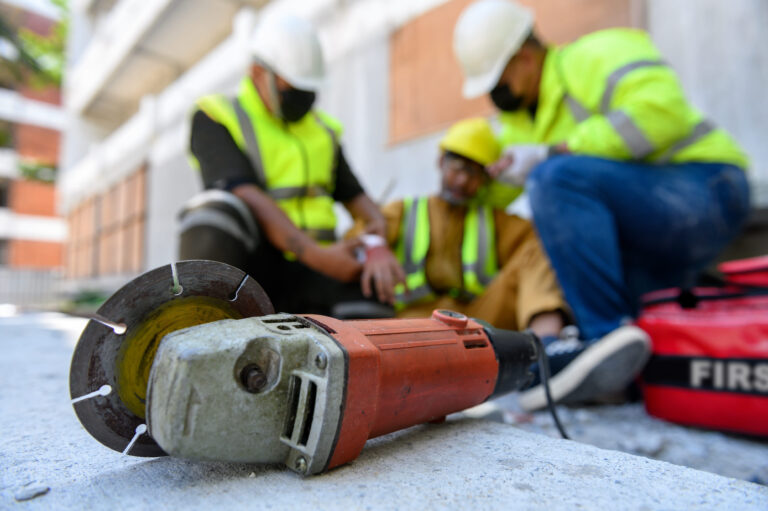
If you’ve been hurt on a construction site in Chicago, you’re probably dealing with a lot of things all at once—a serious injury, lost work, medical bills, and a system that just feels like it’s totally overwhelming, even before you start figuring out what went wrong. One of the first things you need to understand is that you may have more options than workers’ comp alone to turn to. A construction accident lawyer in Chicago will help you make sense of what those options actually look like and why the difference could be worth hundreds of thousands of dollars. Read on for this guide from the Chicago personal injury lawyers at Lerner and Rowe Injury Attorneys to find out more.
Illinois Workers Comp vs. Personal Injury Construction Claims
The difference between workers’ comp and a personal injury lawsuit is huge, and it’s one of the very first things we always go over with injured workers.
Workers’ comp is a no-fault system in Illinois. That means if you get hurt on the job, you can file a claim regardless of who caused the accident. Workers comp covers medical expenses and some of the wages you lost because of it. But it doesn’t cover things like pain and suffering, your full lost earnings, or any long-term damages you might suffer. Also, because it’s a no-fault system, your employer generally can’t be sued in a traditional personal injury lawsuit.
A personal injury lawsuit against a third party is a completely different matter. If someone other than your direct boss was somehow involved in your injury—like a general contractor, a property owner, a subcontractor, or some equipment manufacturer—then you might be able to sue them directly. This third-party construction accident claim in Illinois isn’t capped like worker comp benefits are. It can include compensation for pain and suffering, full lost wages, and even more long-term costs.
In cases where Illinois workers’ comp vs. personal injury construction cases come up, a lot of injured workers are actually entitled to pursue both claims at the same time. Your workers’ comp claim goes through your boss’s insurance. Your third-party claim goes through civil court. They aren’t mutually exclusive, and not understanding that is probably one of the most expensive mistakes an injured worker can make.
The Illinois Structural Work Act
If you’ve dug around in Illinois construction law at all, you might’ve come across Illinois construction accident law 740 ILCS 100. A bit of background history is important to understand.
For decades, this law held contractors and property owners accountable for accidents on scaffolding, ladders, hoists, or other elevated work areas. It was one of the strongest worker protection laws in the country. But back in 1995, the Illinois Supreme Court severely weakened the act after the state legislature changed workers’ comp law and its reach got a lot smaller.
However, 740 ILCS 100 is still on the books. And there are situations where it might still come into play—especially with situations involving independent contractors or workers who don’t fall under normal workers’ comp. If you were injured in an elevated work situation, it’s worth talking it over to see if any part of the Structural Work Act applies to your case.
The upshot is that Illinois has a long history of trying to protect construction workers from unique hazards and hold the people in charge accountable. And that attitude still impacts how courts approach construction claims in Illinois even now.
OSHA’s Fall Protection Rules and Your Injury Claim
Federal OSHA safety regulations apply all over the country, and Subpart M specifically deals with fall protection—one of the most commonly flouted rules on Chicago construction sites.
Under 1926 Subpart M, workers at heights of six feet or more should be getting some kind of protection—whether it’s a guardrail, a safety net, a personal fall arrest system, or a combination of the above. When contractors just decide to skip these requirements to save a little time or money, the results can be disastrous.
Here’s an important thing to keep in mind: an OSHA violation doesn’t automatically win your lawsuit, but it can be pretty useful evidence of negligence. An OSHA violation injury claim is essentially like using the regulatory record to say that a responsible party was told the safety standard, broke it, and that failure caused your injury.
If OSHA looked into your accident or if we can get to the bottom of what happened through records, site inspections, or witness accounts and find out the fall protection requirements weren’t met, that can be the core of the OSHA violation personal injury claim in Chicago that your Cook County construction accident attorney will be able to pursue.
Common Construction Injuries Our Construction Accident Lawyer in Chicago Team Handles
Scaffolding Failures
Scaffold collapses are some of the worst types of injuries in construction. Whether the platform was just not put together right, overloaded, or missing safety rails. A construction site fall lawyer in Chicago, IL, will look into who put up the scaffold, who checked it, and who was in charge of shutting it down if something looked wrong. Often that’s not the injured worker’s direct boss, which opens the door to a third-party claim.
Construction Site Falls
A construction site fall lawyer in Chicago, IL, doesn’t just handle paperwork; they tackle the tough stuff, such as unguarded floor openings, rickety ladders, wet and slippery surfaces, and handrails that are missing. Sadly, construction site falls are the leading cause of work-place fatalities in this country, and if the fall was caused by something the general contractor or site owner had control over, they can be held liable.
Crane Accidents
A crane collapsing on a construction site is not just a disaster for the operator but for everyone nearby: that’s why these cases often involve a whole bunch of questions about equipment maintenance, making sure the operator is certified to do their job, and whether the crane was even being used properly. There are a lot of people who might be liable here—manufacturers, crane rental companies, and the site supervisors—all of whom may have played a part in what went wrong.
Electrical Strikes
Electrical accidents on construction sites are surprisingly common and usually involve something basic like wires that haven’t been marked as live or not following proper procedures for shutting off power. Utility companies and electrical contractors are often brought in as third-party defendants in these cases, because a worker had no way of knowing what they were walking into.
Who’s Liable for Construction Accidents in Illinois?
When it comes to third-party construction accident claims in Illinois, we have to establish all the parties who had control over the site, the work, or the equipment and decide whether they had a responsibility to do things right.
In practice, that means:
- General contractors – even if they’re not the workers’ employers, they still have a responsibility to keep the site safe.
- Property owners – if they knew about a hazard and didn’t do anything to fix it, they can be held liable.
- Equipment manufacturers – if their defective product led to the accident, they can be held responsible.
- Architects and engineers – if there was a design flaw that ended up causing the accident.
It all comes down to one thing: control. The courts in Illinois have made it clear that whoever has control over the work or the site has a responsibility to keep workers safe; it doesn’t matter if they’re directly in charge or not.
Construction Accident Lawyer in Chicago: Frequently Asked Questions
Q: Can I sue someone other than my employer for a Chicago construction accident?
Yes, you can. If it turns out a general contractor, a property owner, a subcontractor, or equipment manufacturer helped cause your injury, you might be able to file a third-party lawsuit separate from your workers’ comp claim. In Illinois, injured workers are allowed to pursue both at the same time.
Q: What do you actually do for me as a scaffolding accident attorney in Chicago?
We take on the heavy lifting—investigating the accident, figuring out who might be liable, making sure we keep any important evidence, handling communication with insurers and the lawyers on the other side, and building the case for the best possible outcome. Our job is to take the weight of all this off your shoulders so you can focus on getting better.
Q: How does an OSHA violation affect my personal injury claim?
An OSHA violation can be a pretty strong indicator of negligence. When a contractor doesn’t live up to the basic safety standards we have in place. Take for example, fall protection requirements under Subpart M—that can go a long way in showing they didn’t do their part, a crucial bit of evidence in getting a successful personal injury claim off the ground.
Q: What is the Illinois Structural Work Act and does it still have any relevance today?
The Illinois Structural Work Act (740 ILCS 100) was old legislation that made contractors and property owners strictly liable for injuries that happened on elevated work surfaces. But the way it’s applied has changed since 1995.
In fact nowadays, it’s only used in a few specific situations, particularly those involving independent contractors. The best person to talk to about that would be a Chicago construction injury attorney who can take a look at your case and figure out what your best course of action is.
Q: How long do I have to file a construction accident lawsuit in Illinois?
As a general rule, you’ve got two years from the date of the injury to file a personal injury claim in Illinois. Workers’ comp claims have different deadlines in place. The sooner you act the better, because things can disappear quickly—evidence and witness testimony included.
Speak to a Construction Accident Lawyer in Chicago Now
A construction accident can turn your world upside down in a split second. But it doesn’t have to be the same with the legal process. Our Chicago worker’s comp lawyer team handles cases from start to finish—no surprises to deal with. And don’t worry about getting hit with a bunch of upfront costs: there’s no fee to start, and we only get paid if you do.
If you want to talk through what happened and what your options are, give us a call at 708-222-2222, fill out a contact form, or use LiveChat. We’ll listen and help you figure out what to do next.
The information on this blog is for general information purposes only. Nothing herein should be taken as legal advice for any individual case or situation. This information is not intended to create, and receipt or viewing does not constitute, an attorney-client relationship.