



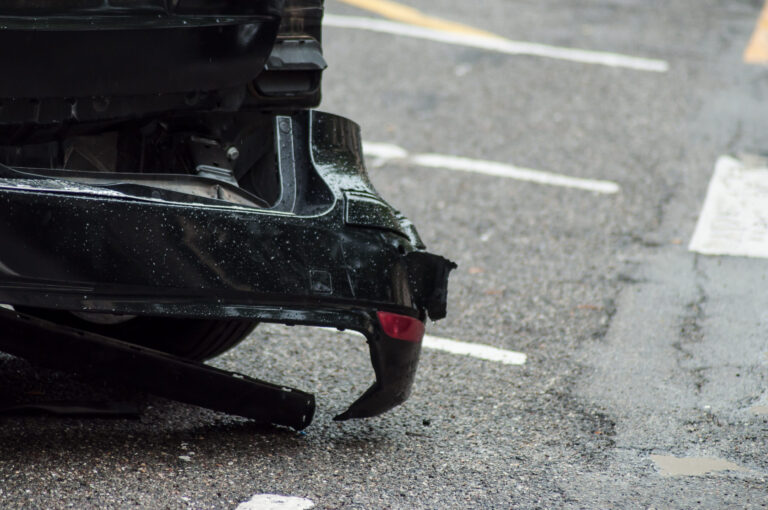
A hit-and-run crash can leave you dealing with injuries, vehicle damage, medical bills, and insurance disputes while the driver responsible disappears. In Chicago, where crashes can happen on Lake Shore Drive, busy intersections, or narrow neighborhood alleys, identifying a fleeing driver may be difficult—but leaving the scene does not eliminate that driver’s legal responsibility. Illinois law imposes specific duties on drivers involved in crashes. 625 ILCS 5/11-401 addresses crashes involving personal injury or death. Depending on what happened, leaving the scene can result in misdemeanor or felony criminal charges. Read on for this guide from the Chicago hit and run lawyers at Lerner and Rowe.
What Is a Hit-and-Run Under Illinois Law 625 ILCS 5/11-401?
Illinois law generally requires drivers involved in qualifying crashes to stop, remain at or move to a safe location near the crash, exchange required information, and provide reasonable assistance to injured people.
Under 625 ILCS 5/11-403, a driver involved in a crash resulting in injury, death, or damage to an attended vehicle must provide identifying information, including the driver’s name, address, registration information, and vehicle ownership information. The driver must also provide reasonable assistance to injured people when necessary or requested.
The exact criminal offense depends on what the crash caused.
Property Damage-Only Hit-and-Run
When a crash results only in damage to a vehicle that is driven or attended by someone, 625 ILCS 5/11-402 requires the driver to stop and fulfill the applicable information-exchange requirements.
Failure to comply is a Class A misdemeanor. If the driver is convicted and the damage exceeds $1,000, the conviction is reported to the Illinois Secretary of State, which can result in a driver’s license suspension.
Illinois law also recognizes that stopping in the middle of a busy highway can create another safety hazard. On a Chicago expressway, for example, a driver may move the vehicle to a nearby safe location, such as an exit-ramp shoulder or suitable cross street, when necessary to avoid obstructing traffic. The driver must still remain at that location and fulfill the statutory requirements.
Hit-and-Run Involving Personal Injury
The consequences become substantially more serious when someone is injured.
Under 625 ILCS 5/11-401, a driver involved in a crash resulting in personal injury or death must immediately stop at the scene—or as close to it as possible—and remain there until the requirements of the law have been satisfied. Illinois defines personal injury for this statute as an injury requiring immediate professional treatment at a medical facility or doctor’s office.
Failing to comply with the duty to stop is a Class 4 felony.
The law also imposes a separate reporting requirement if a driver failed to stop as required. Generally, the driver must report the crash to a nearby police station or sheriff’s office as soon as possible, but no later than 30 minutes after the crash, subject to the statute’s hospitalization exception. Failing to comply with this reporting requirement can result in a Class 2 felony when the crash does not result in death and a Class 1 felony when someone dies.
A conviction under Section 11-401 also requires the Secretary of State to revoke the person’s driving privilege.
What Happens If the Hit-and-Run Driver Cannot Be Found?
Finding a hit-and-run driver in Chicago can be one of the most difficult parts of a hit-and-run case.
Imagine you are driving on the Kennedy Expressway when another vehicle abruptly changes lanes, strikes your car, and speeds away. You may remember the vehicle’s color or approximate make and model but have no license plate number.
That does not necessarily mean there is no evidence.
A hit-and-run accident attorney in Chicago, IL can investigate available evidence that may help identify the vehicle or establish what happened. Depending on the circumstances, potentially useful evidence can include:
- Traffic camera or tollway camera footage
- Dashcam recordings from your vehicle or nearby motorists
- Surveillance video from nearby businesses or residences
- Witness statements and contact information
- Photographs taken immediately after the crash
- Vehicle debris left at the scene
- Paint transfer between the vehicles
- Damage patterns and vehicle part fragments
- Police crash reports and investigative records
- Social media or other information that may help identify the vehicle
Why Paint Transfer Can Matter
Physical evidence can sometimes provide information that a witness cannot.
For example, if a fleeing vehicle leaves paint on your bumper, a qualified automotive or forensic expert may be able to compare the transferred paint with a suspected vehicle. The shape, height, color, location, and characteristics of the damage may also help reconstruct how the collision occurred.
This type of evidence is especially important when there is no clear photograph of the license plate.
Witness Canvassing in Chicago
Witnesses can disappear just as quickly as surveillance footage.
Someone walking through an alley, driving behind you, working at a nearby business, or waiting at an intersection may have seen the fleeing vehicle. Promptly identifying and interviewing those witnesses can be critical.
Businesses and private property owners may also have surveillance systems that automatically overwrite older recordings. For that reason, preservation requests should be considered as soon as possible after the crash.
625 ILCS 5/11-401: Can Uninsured Motorist Coverage Apply?
Yes—for bodily injury, Illinois law specifically requires automobile insurance policies to include uninsured motorist protection for people legally entitled to recover damages caused by uninsured and hit-and-run motorists, subject to the terms and conditions of the policy and applicable law.
This can be particularly important when the fleeing driver is never identified.
Suppose a driver hits you in a Chicago alley and leaves before you can obtain a license plate number. You suffer a serious injury and incur medical expenses and lost income. If your auto policy provides the required uninsured motorist bodily injury coverage, you may have a potential claim against your own insurer even though the hit-and-run driver has not been located.
The insurer may investigate whether the crash qualifies as a covered hit-and-run event and whether the available evidence establishes that an uninsured or unidentified motorist caused the injury.
What About Vehicle Damage?
Illinois treats uninsured motorist property damage differently.
Under 215 ILCS 5/143a, property damage coverage for uninsured or hit-and-run motorists must be made available for qualifying private passenger and recreational vehicles, subject to the statute’s requirements and a maximum $250 deductible. However, the statute expressly provides that there is no liability under the required uninsured motorist property damage coverage when the owner or operator of the hit-and-run vehicle cannot be identified.
That distinction matters.
An unidentified hit-and-run driver may potentially trigger uninsured motorist bodily injury coverage, but unidentified driver property damage is treated differently under Illinois law. Depending on your policy, collision coverage or another applicable provision may instead be the source of recovery for vehicle damage.
A Cook County hit-and-run accident lawyer can review the actual policy language and determine what coverage may apply.
How Quickly Should You Notify Your Insurance Company?
Immediately. There is not a single universal statutory notice period in 215 ILCS 5/143a that applies to every hit-and-run insurance claim. Instead, the applicable insurance policy may establish its own notice and cooperation requirements.
Those deadlines can be short. Illinois cases have considered policies requiring notice within specified periods, including provisions requiring prompt notice or police reporting within a stated number of hours or days. Courts have also examined whether enforcing a particular notice provision would be reasonable under the circumstances.
Do not assume that because you have several years to pursue a personal injury lawsuit, you can wait the same amount of time before notifying your insurer.
After a hit-and-run:
- Call 911 when appropriate and report the crash.
- Seek medical treatment for any injuries.
- Document the vehicles, damage, roadway, and surrounding area.
- Obtain the police report information.
- Notify your insurance company as soon as possible.
- Review your policy for specific notice requirements.
- Preserve photographs, video, medical records, repair estimates, and witness information.
- Avoid giving a recorded statement or signing a settlement agreement without understanding your rights.
Prompt notice can also give investigators a better opportunity to locate surveillance footage and other evidence.
A Chicago Hit-and-Run Does Not Have to End with an Unknown Driver
Consider a crash in a Chicago neighborhood where a driver strikes your vehicle while turning into a narrow alley and immediately accelerates away.
You may initially have only a damaged vehicle and a vague description of the other car.
But investigators may find a nearby security camera showing the vehicle entering the alley. A second camera could capture the vehicle leaving. A witness may remember part of the license plate. Your vehicle may contain paint transfer or debris from the other vehicle. A repair facility may document distinctive damage.
One piece of evidence may not identify the driver. Several pieces considered together might.
That is why it is important to preserve evidence before it disappears and to investigate the crash promptly.
625 ILCS 5/11-401: What Should You Do after a Hit-and-Run?
Your first priority should always be safety and medical care.
If you can do so safely, record as much information as possible about the fleeing vehicle, including its:
- Make and model
- Color
- License plate, even if only partial
- Direction of travel
- Distinctive markings
- Damage
- Number of occupants
Take photographs of your vehicle and the crash scene. Look for witnesses and ask for their contact information. Do not chase the fleeing driver or put yourself in danger.
Report the crash to law enforcement and notify your insurance company promptly.
If you were injured, keep records of medical treatment, prescriptions, transportation costs, lost wages, and other expenses related to the crash.
Most importantly, do not assume that an unidentified driver means you have no legal options.
625 ILCS 5/11-401 Frequently Asked Questions
1. What does 625 ILCS 5/11-401 require after an Illinois hit-and-run?
Section 11-401 requires a driver involved in a crash resulting in personal injury or death to stop at the scene, or as close to it as possible, and remain there until the statutory requirements are satisfied. When it comes to criminal penalties for a hit-and-run in Illinois, failing to stop can be a Class 4 felony.
2. Is leaving the scene of a property-damage crash a felony in Illinois?
A crash involving only damage to an attended vehicle is generally governed by 625 ILCS 5/11-402. Failing to stop is a Class A misdemeanor. Hit-and-run crashes involving personal injury or death can carry substantially more serious felony penalties under 625 ILCS 5/11-401.
3. Can I make an uninsured motorist claim for a hit-and-run in Illinois if the driver is never identified?
Potentially, if you suffered bodily injury and your policy provides applicable uninsured motorist coverage. Illinois law requires uninsured motorist bodily injury coverage that protects insured persons against qualifying hit-and-run motorists. The specific facts and policy language still matter.
4. Can uninsured motorist coverage pay for my vehicle damage if the hit-and-run driver cannot be found?
Illinois law specifically states that required uninsured motorist property damage coverage does not impose liability when the owner or operator of the hit-and-run vehicle cannot be identified. Other coverage, such as collision coverage, may be relevant depending on the policy.
5. How long do I have to notify my insurance company about a hit-and-run?
You should notify your insurer as soon as possible. Illinois law does not establish one universal notice deadline for every hit-and-run insurance claim; the applicable policy may contain specific notice requirements. Courts have considered the reasonableness and circumstances surrounding enforcement of such provisions, so delaying notification can create unnecessary complications.
Talk to a Chicago Hit-and-Run Accident Attorney Now
A hit-and-run crash can leave you wondering how you will pay your medical bills, repair your vehicle, or prove what happened when the responsible driver is nowhere to be found.
You do not have to investigate the crash alone. The Chicago personal injury lawyers at Lerner and Rowe can investigate available evidence, evaluate potential insurance coverage, and help determine what options may be available after a Chicago hit-and-run crash.
If you or a loved one was injured in a hit-and-run accident, call the Lerner and Rowe Chicago office, fill out a contact form, or use our LiveChat service today. Do not wait for critical evidence to disappear or assume that an unidentified driver means you cannot pursue compensation.
The information on this blog is for general information purposes only. Nothing herein should be taken as legal advice for any individual case or situation. This information is not intended to create, and receipt or viewing does not constitute, an attorney-client relationship.