



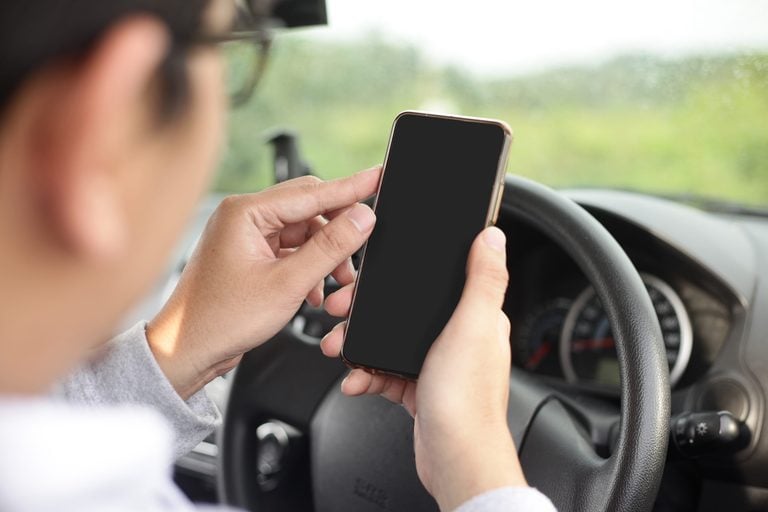
Distracted driving can turn an ordinary trip through Peoria into a serious collision in seconds. A driver looking down at a phone, entering an address into a GPS, eating behind the wheel, or turning to speak with a passenger may fail to see a stopped vehicle, miss a traffic signal, drift across a lane, or rear-end another motorist. When a distracted driver causes an accident, proving what happened can be more complicated than establishing ordinary driver negligence. If you were injured in a distracted driving crash, a distracted driving accident lawyer in Peoria, Arizona can investigate the circumstances and pursue evidence that may otherwise disappear. Read this guide from the Peoria car accident lawyers at Lerner and Rowe to learn more.
What Is Distracted Driving?
Distracted driving occurs when a driver’s attention is diverted away from operating the vehicle safely. Distraction generally falls into three categories:
- Visual distraction: The driver looks away from the roadway.
- Manual distraction: The driver takes one or both hands away from driving.
- Cognitive distraction: The driver’s attention is focused on something other than driving.
Cell phone use can involve all three. A driver who reads a text, for example, may take their eyes off the road, remove a hand from the steering wheel, and concentrate on the message rather than surrounding traffic.
But phones are not the only source of distraction. Drivers can also become distracted by:
- GPS or navigation systems
- Eating or drinking
- Adjusting the radio
- Looking for something inside the vehicle
- Passengers, including children
- Pets
- Applying makeup or grooming
- Reading printed materials
- Watching videos
- Reaching for objects
- Using other electronic devices
A driver does not necessarily have to violate Arizona’s cell phone law to be legally responsible for causing a crash. The broader question in a personal injury claim or distracted driver injury lawsuit in Peoria is whether the driver’s conduct fell below the level of reasonable care and caused the collision and resulting injuries.
Distracted Driving Accident Lawyer in Peoria, Arizona: A.R.S. § 28-914
Arizona texting and driving law, ARS 28-914, restricts how drivers may use portable wireless communication devices and certain electronic devices while operating a vehicle.
The law generally prohibits drivers from physically holding or supporting a portable wireless communication device or stand-alone electronic device while driving. It also prohibits writing, sending, or reading text-based communications, including text messages, emails, instant messages, and internet data, while operating a vehicle. Hands-free functions, including voice-based communications and hands-free navigation or GPS use, are permitted under the statute.
There are exceptions, including certain emergency situations and authorized uses by emergency and law-enforcement personnel.
Arizona also enacted HB 2109 in 2026, which amended the distracted-driving penalties. The legislation was signed by Governor Katie Hobbs in June 2026. Among other changes, it increased the civil penalty for a second or subsequent violation to $400 and added a $150 penalty when a violation results in an accident involving a motorcycle.
The important point for an injury victim, however, is that a traffic citation is not necessarily required to pursue a civil claim. A driver can potentially be liable for causing an accident because of negligent distraction even if police did not issue a citation under ARS 28-914.
How Can a Cell Phone Help Prove Distraction?
One of the biggest challenges in a distracted driving case is establishing what the other driver was doing immediately before the collision.
A driver may tell police or an insurance company that they were paying attention. An eyewitness may remember seeing a phone in the driver’s hand. But additional evidence can sometimes provide a more complete picture.
Depending on the circumstances, an investigation may seek:
- Cell phone records
- Call records
- Text-message activity
- Data-use records
- Evidence concerning the timing of communications
- App activity
- GPS or location information
- Dashcam footage
- Traffic-camera footage
- Nearby business surveillance video
- Eyewitness statements
- Police photographs and reports
- Vehicle event data, when available
A cell phone records request or, when appropriate, a subpoena to a wireless carrier may help determine whether communications or other activity occurred around the time of the crash.
Arizona courts recognize that carrier records can be relevant evidence. In a 2025 Arizona appellate decision, the court addressed the admission of call detail records from carriers and cell site location information under the business records exception to the rules of evidence.
That does not mean a phone record automatically proves that a driver was distracted. A call occurring at approximately the time of a collision, for example, does not by itself establish exactly what the driver was doing or whether the phone was being operated manually. The evidence has to be evaluated in context.
That is why distracted driving cases often require more investigation than simply obtaining the police report.
Why Distraction Claims Can Require More Evidence
A standard rear-end collision may be relatively straightforward. Suppose a driver strikes the vehicle in front of them while traffic is stopped. Witnesses, vehicle damage, photographs, traffic conditions, and the police report may help establish what happened.
A cell phone accident claim in Arizona can involve another layer of questions:
- Was the driver distracted?
- What caused the distraction?
- When did the distraction occur?
- Was the driver using a cell phone?
- Was the phone being used immediately before the crash?
- Did the distraction contribute to the driver’s failure to brake, steer, or react?
The answers may require obtaining evidence from multiple sources.
For example, an attorney investigating a Peoria collision might compare the driver’s account with eyewitness statements, surveillance footage, vehicle positions, photographs, and available electronic records. If the evidence suggests that the driver was using a phone around the time of the crash, additional investigation may be necessary to determine whether that activity was connected to the collision.
This process can involve formal discovery, requests for records, subpoenas, depositions, and testimony from witnesses or qualified experts, depending on the circumstances.
GPS Use Under Arizona Law
GPS use deserves special consideration under Arizona law.
A driver generally may use a portable device in a hands-free manner for navigation and GPS functions under ARS 28-914.
But “legal” does not necessarily mean “safe in every circumstance.”
For example, a driver could have a phone mounted in the vehicle but become distracted while repeatedly interacting with the navigation system. If that conduct contributes to a crash, the fact that the device was being used for navigation does not automatically eliminate a potential negligence claim.
The same principle can apply to other activities that are not specifically prohibited by the hands-free statute. Personal injury cases focus on the driver’s conduct and whether it contributed to the collision.
Peoria and Northwest Valley Traffic Can Increase the Consequences of Distraction
Peoria drivers encounter a mix of surface streets, commercial corridors, freeway traffic, intersections, and heavily traveled routes throughout the Northwest Valley.
Major roadways in and around the area include Loop 101, US 60/Grand Avenue, Peoria Avenue, Bell Road, Northern Avenue, and other major east-west and north-south routes. ADOT identifies US 60/Grand Avenue and Loop 101 as significant transportation corridors in the area.
Traffic conditions can make a few seconds of inattention particularly dangerous.
A driver traveling on a busy roadway may need to react quickly to:
- Sudden lane changes
- Vehicles entering traffic
- Pedestrians
- Turning vehicles
- Congestion
- Brake lights
- Merging traffic
- Motorcycles and bicyclists
- Traffic signals
- Construction or lane restrictions
Freeway merges and exits can be especially demanding. ADOT has noted that Phoenix-area freeway projects and lane configurations can affect traffic flow and merging conditions.
If a driver is looking at a text or trying to enter a destination into a navigation app instead of watching traffic, even a momentary distraction can prevent them from recognizing a developing hazard.
Evidence a Distracted Driving Accident Lawyer in Peoria, Arizona Can Recover
Depending on the circumstances, an attorney may investigate several categories of evidence.
- Police evidence: This can include the crash report, officer observations, citations, photographs, witness statements, and diagrams.
- Electronic evidence: Cell phone and carrier records may provide information about communications or activity around the time of a collision.
- Video evidence: Dashcams, traffic cameras, surveillance systems, and other recordings may capture the driver’s behavior.
- Witness evidence: Passengers, pedestrians, other motorists, and nearby witnesses may have seen the driver using a phone or otherwise behaving distractedly.
- Vehicle evidence: Some newer vehicles contain electronic systems that may provide information relevant to how a vehicle was operating before a crash.
- Physical evidence: Vehicle damage, roadway evidence, skid marks, debris, and collision patterns can help reconstruct what happened.
The value of each piece of evidence depends on the facts of the particular collision. Strong cases often involve multiple pieces of evidence that support the same conclusion.
Distracted Driving Accident Lawyer in Peoria, Arizona FAQs
1. Is texting while driving illegal in Arizona?
Yes. ARS 28-914 generally prohibits drivers from physically holding or supporting a portable wireless communication device while operating a vehicle and prohibits writing, sending, or reading text-based communications while driving, subject to statutory exceptions.
2. Can I sue a driver who was distracted but did not receive a ticket?
Potentially. A traffic citation is not necessarily required to pursue a personal injury claim. Civil liability depends on the facts and evidence establishing negligence and causation. Evidence that a driver was distracted may help support the claim.
3. Can phone records prove that a driver was texting?
Phone or carrier records may provide evidence concerning calls, texts, or other communications around the time of a collision. However, records do not automatically prove exactly how a driver was using a phone or whether the activity caused the crash. Other evidence may be necessary to establish the connection.
4. What if the driver was distracted by GPS instead of texting?
Arizona law permits certain hands-free navigation and GPS use. However, a driver can still potentially be negligent if their conduct while operating or interacting with a navigation system contributes to a collision.
5. How long do I have to pursue a car accident claim in Arizona?
Arizona generally imposes a two-year statute of limitations for many personal injury claims, although exceptions and different deadlines can apply depending on the circumstances. Because missing a legal deadline can affect your ability to recover compensation, it is important to have your specific situation reviewed promptly.
Call a Distracted Driving Accident Lawyer in Peoria, Arizona
A distracted-driving accident can leave you dealing with medical bills, lost income, vehicle damage, pain, and uncertainty about what caused the crash.
The evidence needed to establish distraction may also become harder to obtain as time passes. Electronic records, surveillance footage, vehicle data, and witness memories can all become more difficult to secure.
An investigation conducted by our Peoria personal injury lawyers can help determine whether the other driver was texting, talking on a phone, interacting with a navigation system, eating, dealing with passengers, or otherwise distracted before the collision.
If you were injured in a crash, call now to discuss your options. You can also use our online contact form or LiveChat to get started.
The information on this blog is for general information purposes only. Nothing herein should be taken as legal advice for any individual case or situation. This information is not intended to create, and receipt or viewing does not constitute, an attorney-client relationship.