



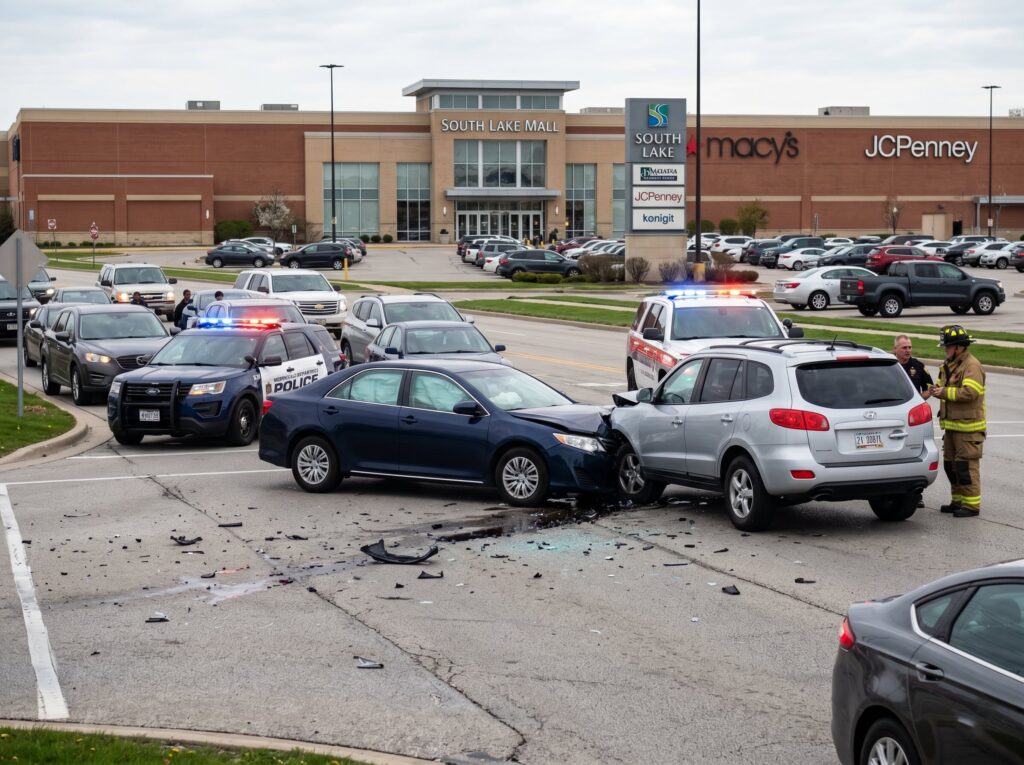
The Hoosier State changed its seat belt rules in 2024 when Indiana HEA 1090 was implemented. It amends Indiana Code 9-19-11-8.5 and rewrites how damages get calculated in car accident claims across the state. Under the new law, defendants in personal injury cases can now use a plaintiff’s seat-belt non-use against them. This isn’t done to prove fault, but to argue the plaintiff made their own injuries worse. If you were hurt near Southlake Mall on the US 30 corridor or along I-65 outside Merrillville, this law may cut into what you can recover.
The good news is that a Merrillville car accident lawyer from Lerner and Rowe can help you protect your claim. Our team is familiar with the aggressive tactics insurance companies use to try to reduce payouts for legitimate claims. You can count on our team to do everything possible to make sure that you receive the full compensation you’re legally entitled to.
The History of Indiana Seat Belt Admissibility Rules
Indiana used to keep seat belt evidence out of personal injury claims completely. Whether you were buckled or not had no bearing on your compensation. Defense attorneys couldn’t bring it up. Insurers couldn’t use it to chip away at your claim. That protection ended when Indiana HEA 1090 took effect.
What Exactly Is Indiana HEA 1090?
The bill amends Indiana Code § 9-19-11-8.5 in one targeted way. Defendants can now introduce seat-belt non-use as evidence, but only to argue the plaintiff failed to mitigate their damages. They still cannot use it to claim you caused the crash and fault stays off the table, but what the damages look like does not.
Note that there are a few conditions that apply to the new rules. The Indiana seat belt law applies to plaintiffs 15 and older that were in vehicles equipped with an inflatable restraint system built after September 1, 1986.
How Indiana HEA 1090 Changes Personal Injury Claims
The changes to Indiana Code 9-19-11-8 seat belt evidence rules hand insurers a new argument. Before Indiana HEA 1090, seat-belt non-use had no place in a civil injury claim. Now it does. A defendant who successfully shows that an unbuckled plaintiff would have suffered fewer injuries can seek a reduction in the damages awarded. Insurance companies will not hesitate to use this.
The Defendant’s Burden of Proof Under Indiana HEA 1090
Under state law, the burden of proof falls entirely on the defendant. This requires the defendant to prove two distinct things. First, that the plaintiff was not wearing a seat belt at the time of the crash. Second, that wearing a seat belt would have reduced or prevented the injuries the plaintiff suffered. Both elements are required; proving one without the other is not enough.
Defendants typically rely on accident reconstruction experts and biomechanical specialists to build this case. A Merrillville car accident lawyer from Lerner and Rowe knows how to challenge that evidence at every step.
The Concept of Mitigating Damages after a Crash
“Mitigation of damages” requires injury victims to take reasonable steps to minimize their own losses. Wearing a seat belt is one of those steps. If a defendant successfully argues that seat-belt non-use made a plaintiff’s injuries worse, the court can reduce the total damages awarded. Indiana HEA 1090 brings this concept directly into the state’s car accident litigation for the first time.
How Indiana HEA 1090 Affects Modified Comparative Fault
Indiana operates under a modified comparative fault system. A plaintiff can recover damages as long as their share of fault doesn’t exceed 51 percent. However, Indiana HEA 1090 adds a separate layer to this framework.
Seat-belt non-use does not factor into fault percentage. It goes toward damages reduction instead. A plaintiff who bears zero fault for causing the crash can still see their damages reduced if they weren’t buckled. Understanding how these two frameworks interact is essential to building the strongest possible claim.
Exceptions and Age Requirements Under the Statute
Indiana HEA 1090 does not apply in every case. As mentioned above, specific conditions must be met before seat belt evidence can be introduced. The injured plaintiff must be at least 15 years old. The vehicle must have been manufactured after September 1, 1986 and it must also be equipped with an inflatable restraint system, commonly known as airbags.
Note that, Children under 15 are fully exempt. Their claims cannot be reduced on the basis of seat-belt non-use under this statute. Separate rules govern child restraint requirements in Indiana.
These conditions are not always obvious after a crash. Accidents along high-traffic corridors like US 30 through Merrillville and SR 49 in Valparaiso frequently raise these exact questions. A skilled Merrillville car accident lawyer from Lerner and Rowe will evaluate which conditions apply to your case before the insurer ever makes their move.
Frequently Asked Questions About Indiana HEA 1090
Our Indiana automobile injury attorneys have been asked numerous questions about Indiana seat belt laws. Here are the answers to the most common questions our team received.
Can I Still File a Car Accident Claim If I Wasn’t Wearing a Seat Belt?
Yes. Indiana HEA 1090 does not prevent injured plaintiffs from filing a claim. It does not make seat-belt non-use a factor in determining who caused the accident. What the law allows is for the defense to argue that your injuries were worse because you weren’t buckled. Your right to file remains fully intact. What may change is the total compensation you are able to recover.
When Did Indiana HEA 1090 Officially Go Into Effect?
Indiana HEA 1090 was signed into law and took effect in 2024. Any accident occurring after the effective date may be subject to the new seat belt evidence rules if the other statutory requirements are met. Cases that predate the law are governed by the prior standard. Under that standard, seat-belt non-use was not admissible in civil proceedings at all.
Does the Seat Belt Defense Apply to Young Children Under This Law?
No. Indiana HEA 1090 applies only to plaintiffs who are 15 years of age or older. Children under 15 are fully exempt. Their claims cannot be reduced on the basis of seat-belt non-use under this statute. This is true regardless of whether they were buckled at the time of the crash. Separate laws govern child passenger restraint requirements in Indiana.
How Does the Insurance Company Prove Injuries Caused by Not Wearing a Seat Belt?
Insurers do not rely on guesswork. They bring in expert witnesses to build their argument. Accident reconstruction specialists analyze how the crash unfolded. Biomechanical engineers assess how the plaintiff’s body would have moved if restrained. Medical professionals then connect that analysis to the specific injuries suffered.
It is a coordinated, well-funded strategy. A savvy Merrillville car accident lawyer from Lerner and Rowe Law Group will go toe-to-toe with every expert and challenge every piece of that evidence.
Can an Insurance Company Completely Deny My Claim for Being Unbuckled?
No. Indiana HEA 1090 allows for a reduction in damages, not a complete denial of a claim. Seat-belt non-use is not grounds for shutting down your case entirely. Any insurer that uses it that way is misapplying the statute.
If an adjuster tells you your claim is denied because you weren’t wearing a seat belt, pay close attention. That is a red flag. You are likely dealing with a devious company that is counting on you not knowing your rights under Indiana law.
Why You Need an Attorney Familiar with Indiana HEA 1090
Indiana HEA 1090 gives defense teams a new weapon. Insurance companies are already building seat-belt non-use arguments into their claims review process. The Indiana seat belt defense law is new territory for Indiana courts. Defense teams are pushing its limits aggressively.
You need someone who understands both sides of this statute and knows how to neutralize it. The right attorney makes the difference between a reduced settlement and a full recovery. Do not let an insurer use this law against you unchallenged.
Contact a Trusted Indiana Automobile Injury Attorney Today
Indiana HEA 1090 creates real risk for injured plaintiffs. Insurance companies will use this law. They will use it early and use it hard. You need an attorney who knows exactly how to counter it.
Contact the Merrillville injury attorneys at Lerner and Rowe Injury Attorneys today for a free consultation. Our firm has achieved significant results for more than 150,000 injury victims nationwide, including $1 billion in the last three years alone. There are no fees unless we win, thanks to our no-fee promise.
Lerner and Rowe is available 24/7 by phone at (219) 999-0122, through LiveChat, or through our encrypted contact form. Reach out to us today to get the service and settlement that you deserve.
The information on this blog is for general information purposes only. Nothing herein should be taken as legal advice for any individual case or situation. This information is not intended to create, and receipt or viewing does not constitute, an attorney-client relationship.