



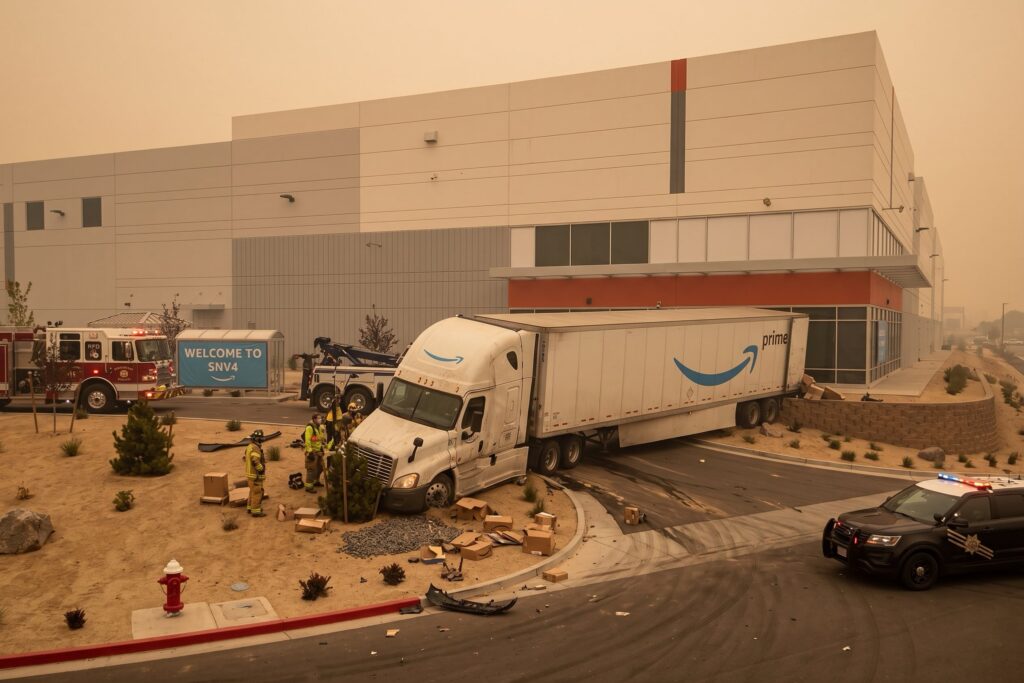
During August, Sierra Nevada wildfires can push thick smoke into the Truckee Meadows, blanketing I-80 and US-395 in haze that reduces visibility to a fraction of a mile. For commercial truckers running freight through the corridor, that smoke is an operational hazard — and federal safety regulations require them to reduce speed and increase following distance when conditions demand it. When a trucker ignores those requirements and causes a Reno wildfire truck accident, the injuries are devastating. A Reno truck crash lawyer from Lerner and Rowe can investigate the crash, obtain the electronic data that proves the trucker’s recklessness, and fight to recover every dollar you are owed.
Truck accident claims are fundamentally different from standard car accident claims. The trucking company, the freight broker, and the truck’s manufacturer may all share liability. Federal motor carrier regulations impose specific standards that go well beyond state traffic law. Lerner and Rowe’s accomplished Reno attorney knows the regulatory framework and knows how to use it.
The Risk of a Reno Wildfire Truck Accident
A fully loaded 18-wheeler traveling at 65 mph needs roughly 525 feet to stop under ideal conditions. In wildfire smoke that reduces visibility to 200 feet, that stopping distance becomes a death sentence for any vehicle that encounters a braking or stopped semi-truck without warning. Federal Motor Carrier Safety Administration regulations — specifically 49 CFR 392.14 — require commercial drivers to exercise “extreme caution” in hazardous conditions, including conditions of reduced visibility. A trucker who maintains freeway speeds in dense wildfire smoke has violated that regulation.
The I-80 corridor between Reno and the California border is one of the highest-volume freight routes in the West, carrying distribution traffic to Amazon Reno fulfillment centers and Peppermill Reno resort supply chains. When wildfire smoke rolls in from the Sierra, that freight traffic does not stop, and the combination of high-volume heavy truck traffic and near-zero visibility creates the conditions for catastrophic chain-reaction crashes.
Northern Nevada Wildfire Smoke Big Rig Accidents
Northern Nevada wildfire smoke big rig accidents have a specific injury pattern that reflects the physics of a fully loaded semi-truck in reduced visibility. A truck that rear-ends a passenger vehicle in dense smoke at 65 mph does not merely damage the rear of the car — it overrides the vehicle’s entire rear structure, often pushing the occupant compartment forward and collapsing the frame. The injuries that result — broken bones, spinal cord compression, and severe brain injuries — frequently require surgery, months of rehabilitation, and in the worst cases result in permanent disability.
Wildfire smoke creates a specific legal advantage in these claims: Air Quality Index data and NOAA visibility records document exactly how severe the smoke conditions were at the time and location of the crash. That data eliminates the argument that the conditions were unforeseeable — they were measured, documented, and available to every trucker in the corridor via commercial GPS and navigation systems. Lerner and Rowe obtains that data as part of every wildfire smoke truck crash investigation.
Liability for a Reno Wildfire Truck Accident
Liability in a Reno wildfire truck accident typically involves multiple parties, each with their own insurance coverage. The truck driver is personally liable for their negligent decision to maintain unsafe speeds in poor visibility. The trucking company is vicariously liable for the driver’s actions under respondeat superior, and independently liable if it created pressure to maintain delivery schedules despite hazardous conditions. The freight broker who contracted the load may share liability if it required delivery timelines incompatible with safe driving in wildfire conditions.
Nevada’s modified comparative fault system means you can recover damages as long as you are not found more than 50 percent responsible for the crash. In a rear-end collision caused by a trucker maintaining unsafe speeds in smoke, the driver’s fault percentage is typically very high. Lerner and Rowe’s skilled Reno truck crash lawyer documents every layer of liability from the first day of the case — the driver’s log, the company’s dispatch records, and the freight contract all become evidence.
Reno Freight Haul Weather Liability
Reno freight haul weather liability cases require a specific understanding of how federal motor carrier regulations interact with Nevada state negligence laws. Under 49 CFR 392.14, a commercial driver who encounters hazardous conditions is required to reduce speed to a level that allows safe stopping within the distance they can see. Violating that regulation in a crash that causes injuries is negligence per se — the violation itself establishes fault without requiring the injured party to separately prove the driver was careless.
When a trucking company’s dispatch logs show it instructed a driver to maintain a delivery schedule despite documented wildfire smoke alerts on the route, that instruction is independent evidence of corporate negligence. Lerner and Rowe requests dispatch records, driver communication logs, and load contract documentation as part of every Reno freight haul weather liability investigation.
Evidence for a Reno Wildfire Truck Accident
Truck accident evidence disappears faster than almost any other category of personal injury claim. Federal regulations require trucking companies to preserve post-crash evidence for specific periods, but those retention windows are short and companies have been known to allow evidence to be destroyed before those windows expire. Lerner and Rowe sends spoliation letters to the trucking company, the freight broker, and the truck’s manufacturer within 24 hours of being retained — before any evidence is altered, discarded, or overwritten.
The evidence package in a Reno wildfire truck accident claim includes the truck’s Electronic Logging Device data, dashcam footage, the driver’s hours-of-service records, the post-crash vehicle inspection report, the company’s maintenance records for the specific truck, and the dispatch logs from the day of the crash. Each of these documents tells part of the story — together, they establish whether the driver was rested, whether the truck was maintained, and whether the company knew its driver was operating in dangerous conditions.
A Reno Truck Accident Lawyer Secures ELD Data
The Electronic Logging Device is the single most valuable piece of evidence in a commercial truck crash claim. Federal regulations require ELDs in virtually all commercial trucks, and the data they record — speed, acceleration, braking events, hours of service, GPS position — provides a second-by-second account of everything the truck did in the minutes before and during the crash. A Reno truck accident lawyer from Lerner and Rowe issues the ELD preservation demand on the day we are retained and pursues an emergency court order if there is any indication the company plans to deny access or allow the data to be overwritten.
ELD data combined with the Air Quality Index records for the I-80 Truckee River Canyon corridor at the time of the crash creates a provable narrative: the smoke conditions required reduced speed under federal regulation, the ELD shows the driver maintained unsafe speed, and the crash resulted directly from that decision. That combination is the foundation of the liability case, and it is available only if the data is preserved before it disappears.
Common Reno Wildfire Truck Accident Claims
The Reno wildfire truck accident claims our team handles most frequently during August and September fall into predictable categories, each driven by the specific traffic and weather conditions of the I-80 and US-395 corridors during fire season.
- Rear-end freeway crashes: A truck that rear-ends a slowing or stopped vehicle in reduced visibility smoke is the most common and most severe truck crash type in the Reno corridor during wildfire season.
- Multi-vehicle chain-reaction crashes: When one truck rear-ends a vehicle and that vehicle is pushed into traffic, the resulting chain-reaction can involve four or five vehicles and multiple injury claims.
- Underride crashes: A passenger vehicle that slides under the rear trailer of a stopped or slow-moving truck in poor visibility produces some of the most catastrophic and often fatal injuries in truck accident litigation.
- Jackknife collisions: A truck driver who brakes too hard in low-visibility conditions on a downhill grade can jackknife, sweeping multiple lanes and striking several vehicles simultaneously.
- Rollover crashes: Evasive maneuvers in smoke or a sudden brake event can cause a top-heavy loaded trailer to roll, spilling cargo across the freeway and creating secondary crash scenarios for following vehicles.
Washoe County Semi Truck Rear-End Collision
A Washoe County semi truck rear-end collision in wildfire smoke is among the most legally straightforward truck crash claims because the following driver’s obligation to maintain safe stopping distance is absolute — it does not depend on the vehicle ahead’s behavior. A trucker who rear-ends a passenger vehicle that was slowing, stopping, or already stopped has failed to maintain safe following distance, violated 49 CFR 392.14, and caused the crash. The only variable is how much damage was done — and in a smoke-reduced-visibility collision involving a fully loaded semi, the damage is typically severe.
These claims also benefit from the specific geographic evidence available on the I-80 Truckee River Canyon corridor: NDOT cameras, NHP incident reports, and the permanent air quality monitoring stations near Reno-Sparks Convention Center and the Grand Sierra Resort document conditions at multiple points along the route. That record establishes the visibility level at the time and location of the crash with precision that is difficult for any defense team to challenge.
Recovering From a Reno Wildfire Truck Accident
Reno wildfire truck accident victims face a recovery that is physically, financially, and legally more demanding than standard car accident cases. Physically, truck crash injuries are more severe — burn injuries from post-crash fires, crush injuries from structural collapse, and catastrophic injuries requiring lifelong care are documented outcomes of high-speed commercial truck crashes. Financially, the medical costs of these injuries dwarf those of passenger car crashes.
In cases involving wrongful death, the family’s damages extend to loss of financial support, funeral expenses, and the full economic and non-economic losses the household has suffered. Lerner and Rowe works with life care planners, economists, and medical specialists to build demands that reflect those losses in full — not just what the trucking company’s insurer is prepared to offer in the first 72 hours.
Lerner and Rowe Fights for Northern Nevada
Lerner and Rowe has recovered billions for injury victims across the country, including victims of commercial truck crashes in Northern Nevada. Our Reno truck crash lawyer handles every wildfire truck accident case with the same urgency and the same resources as our highest-value commercial litigation, because for the families we represent, every case is the most important case we have.
Nevada’s statute of limitations for personal injury claims is two years from the date of the crash under NRS 11.190. Contact Lerner and Rowe as soon as possible after any Reno wildfire truck accident so we can begin the evidence preservation process while the data still exists. You pay nothing unless we win thanks to our “No Fee Promise“.
Call a Trusted Reno Wildfire Truck Accident Lawyer
The Reno personal injury attorney at Lerner and Rowe are available 24 hours a day, 7 days a week. Our team handles Reno wildfire truck accident claims, federal motor carrier liability disputes, and complex multi-party injury cases every day. You can trust our distinguished Reno truck crash lawyer team to fight for the highest compensation allowed under Nevada law while you focus on your recovery.
Call Lerner and Rowe today to schedule your confidential and free consultation. We’re available by phone at (775) 644-4444. You can also reach us online through our LiveChat representatives or by submitting your case details through our encrypted contact form.
The information on this blog is for general information purposes only. Nothing herein should be taken as legal advice for any individual case or situation. This information is not intended to create, and receipt or viewing does not constitute, an attorney-client relationship.